Stand-Alone or Ecosystem?
Pianola can be used as a stand-alone application, as part of a wider digital environment, or as an independent application connected to other systems.
The right setup depends on the role Pianola should play. In some projects, Pianola is the main place where work happens. In others, it manages data or processes that are also used by companion applications, websites, internal systems, or external services.
One practical difference between these setups is where the data lives. Pianola may have its own database, share a database or application structure with companion applications, or keep its data separate and exchange selected information with other systems through integrations.
As a Stand-Alone Application
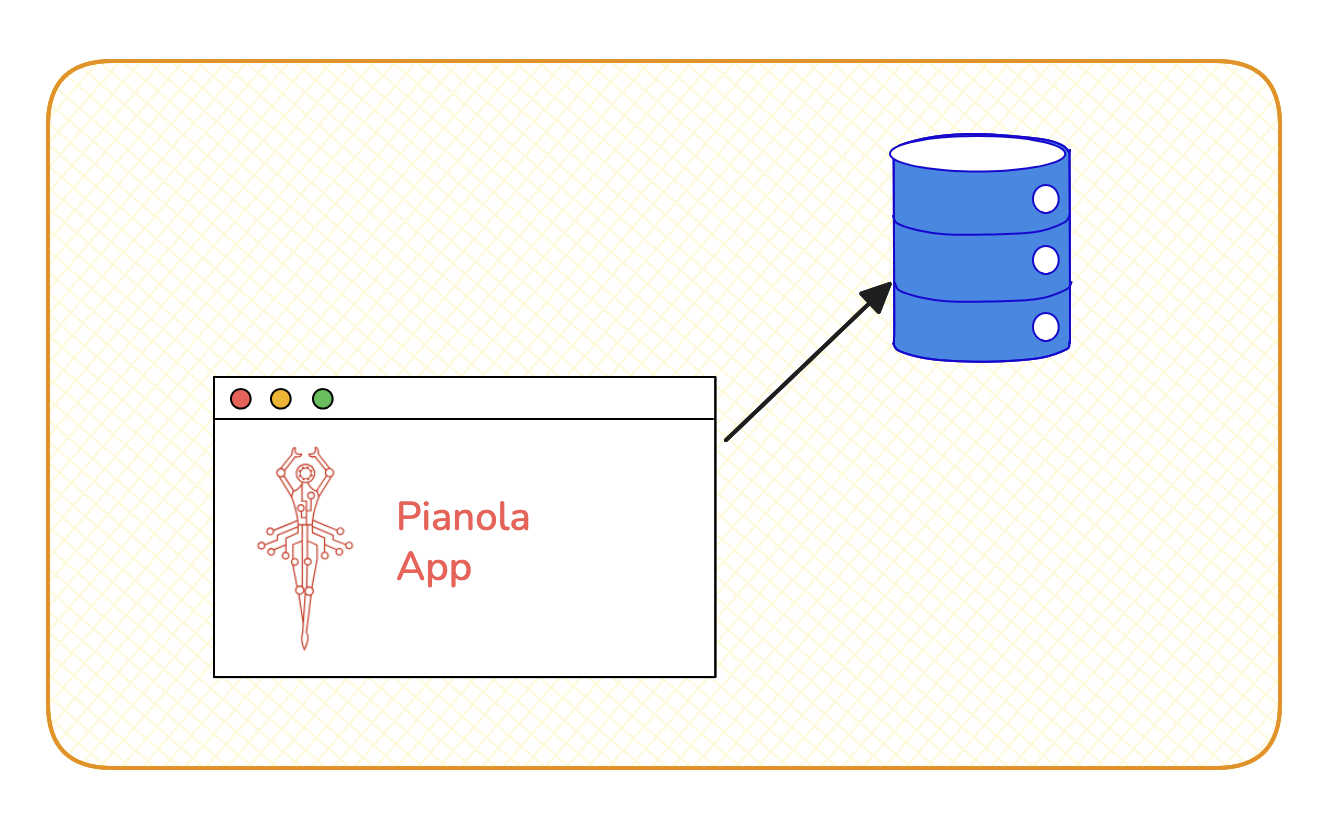
A stand-alone Pianola application does not need to depend on other application parts in order to be useful.
It can contain the screens, forms, records, permissions, dashboards, and actions needed for the agreed workflow. In this setup, Pianola is the main application for organising and managing a specific area of work, and its database belongs to that application setup.
As Part of a Wider Application
Pianola can also provide the management layer for a wider application setup.
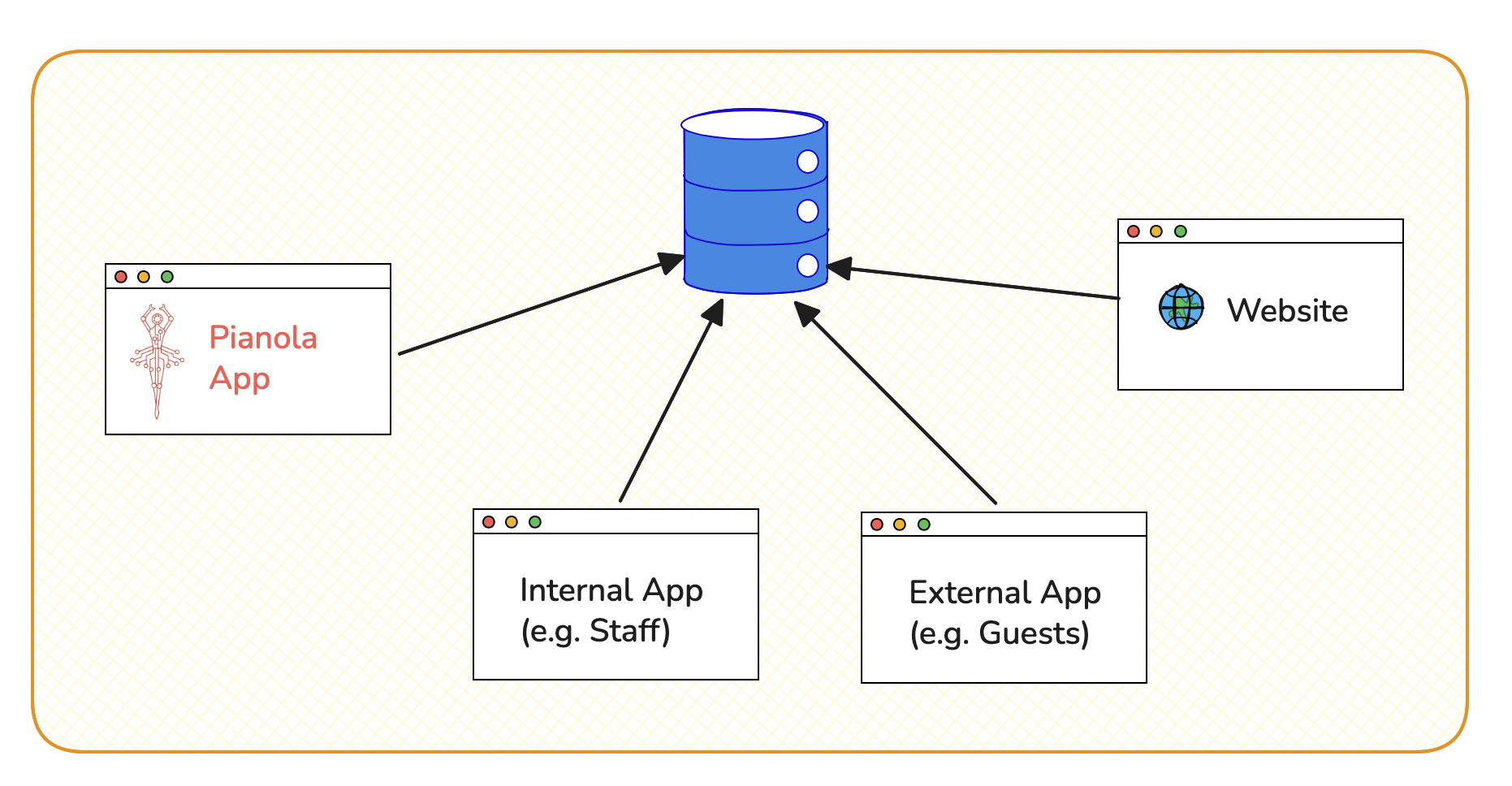
In this kind of setup, Pianola can be the place where data is maintained, reviewed, and managed, while companion applications display or use selected information for their own audience. These companion applications might provide specialised interfaces for internal or external users.
Pianola can also provide data for a website when the website is part of the same wider ecosystem. In this kind of setup, Pianola and the companion applications can be designed around the same underlying database, so the applications are different interfaces for a shared set of records.
Connected to External Systems
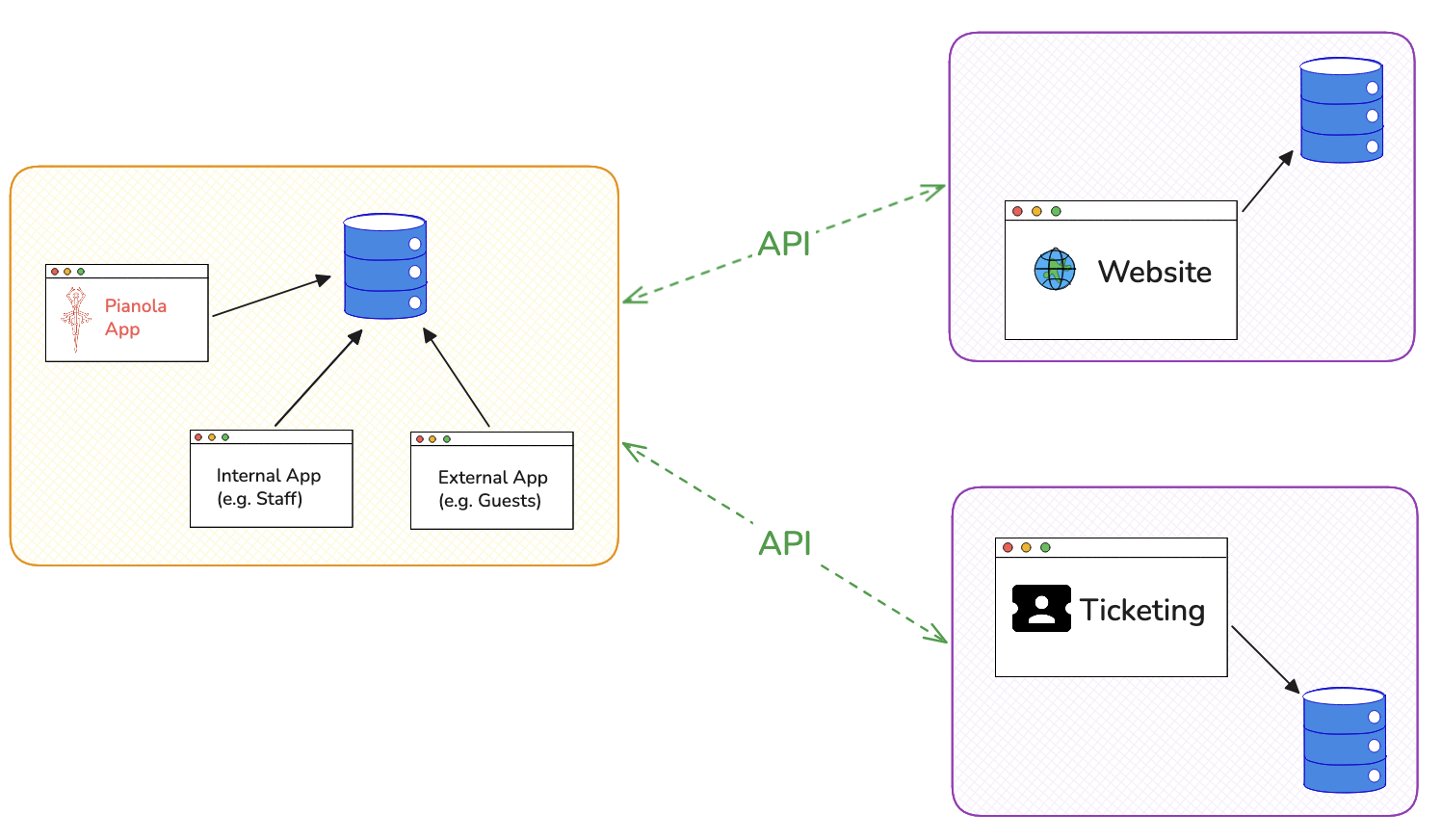
Pianola can also be an independent application that communicates with other systems.
In this setup, Pianola does not need to share the same application structure as the other systems. It can provide or consume information through APIs where data or actions need to move between separate applications.
This means Pianola can have its own database while a website, ticketing system, internal tool, or external service has its own database. Information is then exchanged between systems where the workflow requires it, rather than every application working directly from the same database.
Combined Setups
These approaches can also be combined.
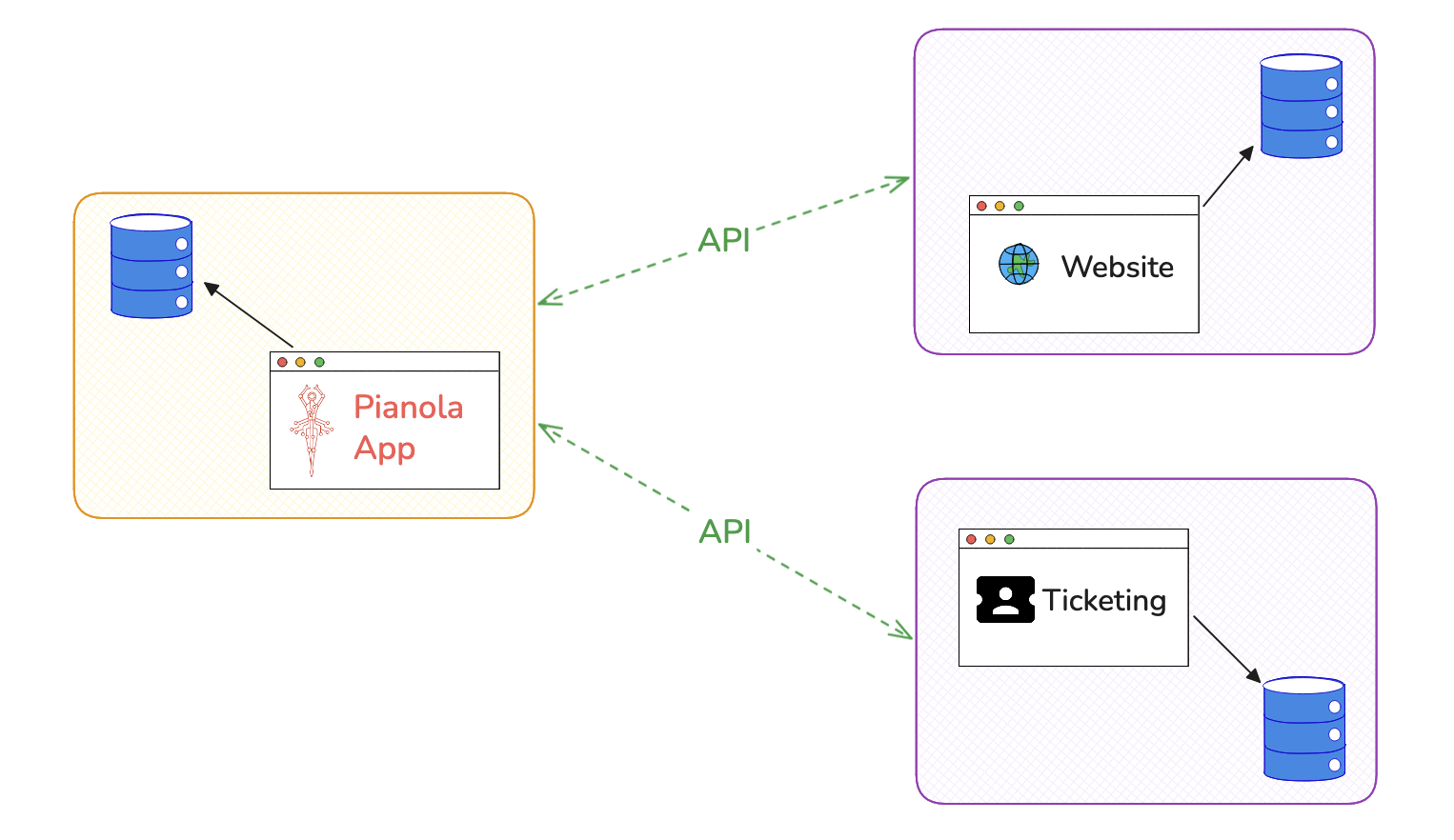
A Pianola application might be useful on its own, provide data for companion applications or a website, and still exchange information with external systems. The structure depends on the surrounding digital environment and on which parts of the workflow Pianola should support.
For example, Pianola and a companion website might share an application structure, while a ticketing platform or reporting system remains separate and receives only selected information through an integration.